InfoLinks - intext

chitika - list unit

Wednesday, February 13, 2013

CAVING: Basic Lesson: Management of Caving

Management of Caving


Management of caves is divided into several phases, as follows:

Before caves

  • Non-Technical
  1. The collection of data and information about caves 
  2. Clearance and a travel pass required
Caving
Management of Caving
  • Technical
  1. Equipment / logistics required 
  2. Appropriate number of personnel (minimum 3 people) 
  3. Leave a message to others about the implementation of the activities

During the Caving

There is a sharing duties and authorities in the team during the activity so that well coordinated.

After the caves

  1. Cheeking equipments 
  2. Maintenance equipments 
  3. Evaluation of the activities
  4. Making activity reports
Read more » Description: CAVING: Basic Lesson: Management of Caving Rating: 3.5 Reviewer: Unknown - ItemReviewed: CAVING: Basic Lesson: Management of Caving

Saturday, February 2, 2013

CAVING: Basic Lesson: Caves Habitats


Basic Lesson: Cave Habitats

All creatures that spend most or all of his life in the cave called troglodyte. Troglodyte habitat based on environmental conditions that support community life can be divided into four zones, namely:
  1. Light zone, which is the mouth of the cave area, the light is the same as outside the cave.
  2. Twilight Zone, an area in the cave where green plants can still grow. Light on this area at dusk.
  3. Dark zone with a temperature change, a total dark areas characterized by temperature and humidity that can still be changed at any time according to changing weather conditions luar.
  4. Cave Habitats
    Cave Biology Pyramid
  5. Constant temperature of the dark zone, an area that is farthest from the mouth of the cave with the temperature and humidity are always fixed.

Animals in the cave can be divided into three different groups, namely:
  • Troglopile, the animals who love the darkness, but still foraging in the cave. For example; bats and swiftlets. Although their homes are included in the total dark zone, but the fluctuations in temperature and humidity are constant. So troghopile utilize caves as shelter and refuge.
  • Trogloxine, the animals only by chance inside the cave, because the animal is actually foreign to the life of the cave. For example; raccoons, snakes, and so on. This animal is normally found in the mouth of the cave to the twilight zone.
  • Troglobion, the entire life cycle of animals which have been done in the cave, so it has different properties with beasts at ground level. For example; fish that have long to live and breed in caves in certain zones undergo physical changes become pigmented, function and vision tidan tentacle become more bare. It can occur after such a long time and the habitat is completely isolated from outside influences.
Read more » Description: CAVING: Basic Lesson: Caves Habitats Rating: 3.5 Reviewer: Unknown - ItemReviewed: CAVING: Basic Lesson: Caves Habitats

Thursday, January 31, 2013

CAVING: Basic Lesson
CAVING: Basic Lesson

Caving
Caving Indonesia
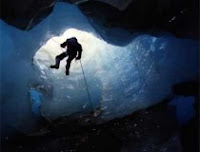
Speleology is the study of caves. Taken from the Greek words spelation = cave and logos = science. But I can not stand alone, but there is a natural structure that surrounds. So Speleology can be defined as the study of the cave and its environments.

1. According ius (international union of speology) based in Vienna, Austria. The cave is any room in the basement, which can enter the
2. According to Dr. r. K. T. Ko (chairman hikespi, 1985). The cave is an underground river path are still flowing (especially local limestone)

Cave has a characteristic in regulating the temperature inside, which is when the hot air outside, the air inside the cave will feel cool, and vice versa,
Trait causing a cave used for shelter. Caves in Indonesia mostly limestone / karts.

Knowledge About Caves


According to the process of formation, cave can be divided into three types, namely:
  1. Lava caves, the caves were formed due to volcanic activity of the volcano. When the eruption, which spewed lava flowing down to form grooves lengthwise. When the top / surface of lava would have frozen, Laca which still continues to flow beneath the surface, causing cavities or hallway.
  2. Littoral caves, the caves were formed cliffs coastal areas, due to erosion by wind and waves.
  3. Limestone caves or Limenstone, the cave is happening in the local limestone / limenstone, a result of the erosion of water on limestone rocks in the ground. Limestone cave that is the object of the search and exploitation for nature lovers or research inexhaustible by scientists. This is because many residential areas or zones limestone structure, so the caves are nearby, however has a positive or negative effect for people who live in the area. 

Occurrence Process Limestone Caves


Limestone formed from calcium carbonate insoluble by water. But rainwater containing carbon dioxide (the absorption of air and soil) can dissolve it. Limestone has the typical characteristics of many cracks horizontally and vertically. And when the rain water into the hole, so that the dissolution occurs cracks / fissures are increasingly growing.

All the above activities take place in the underground layers of limestone, called seturasi zone, a zone under the free water level (water table), seturasi means the area is saturated with water. While the surface of the water table is the boundary of the zone seturasi.

Dilution activity progressively enlarged, causing a vertical or horizontal hallway even room all filled with water, and in some places they meet each other to form a network. At one time, the water table drops due to the motion of the earth, so the hallways into the caves dry (dry caves), where there is still water / flow. In some places a pond or underground river.

Following the steps above, earth movement and erosion occurs conducted underground water and the rain water through cracks in the walls of the cave, alter the shape and structure of the cave. Then some of the typical form of the cave began to occur, such as:

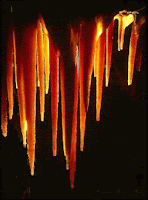
Stalactites
Caving,Stalactites
Stalactites
Which set up a cave ornaments spearhead elongated and tapering down, stick to the roof of the cave. This happens because the water containing high soluble drip through a small point on the roof of the cave. Before the drop of water, evaporation so that the solution of lime contained in it sticks to the roof of the cave and this process runs continuously until a shape that resembles a small pipe with a straw hole. At a certain stage of blockage in the holes so that water no longer flows through the pipe, but again seeping through the base of the pipe and past the outside of the pipe to end of pipe and drip back down. Finally, the outside of the area of ​​the base of the pipe pile a lot of lime solution or in patches, causing bentukkan kerucuk resembling inverted (stalactites).
Caving,Stalagmite
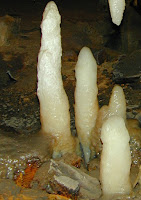
Stalagmite

Stalagmite

Stalactites formed from the process. As the water dripped onto the floor caves, water evaporation, the solution arises lime buildup set up a cone elongated and tapering to the top.Stalactite and stalagmite which ultimately fused, resembling a pillar / pole called the Column.


Drapery, the process is similar to stalactites, only perembesannya occurs in a slit (crack) that extends to the roof of the cave, so the blunt shape that resembles the curtains like a pair of curtains hanging on the roof downwards with a curve-curve.

Flowstone, occurs because of the accumulation of lime solution on the horizontal slit lengthwise on cave walls, thus forming a half-sphere-shaped mound surface / outer layer such as running water

Gourdam (dam), shaped like a small pond and connect with each other to form a network of just mashing the rice fields. Occurs because the surface of the cave floor is not flat, so at some point the dissolved limestone water flows into the bottom of the cave was blocked and formed in accordance with the groove walls floor and hold it happened repeatedly. 
Helektite, which is odd because it forms stalactites can be branched or parallel to the caves, sometimes not even the growth downwards but upwards towards the roof as against the force of gravity (gravity).

 There are several theories about the formation helektite appear as follows:
  1. At a certain air pressure into horizontal growth direction.
  2. Wind makes no vertical growth down.
  3. There are some specific molecules or bacteria that affect growth. 
Read more » Description: CAVING: Basic Lesson Rating: 3.5 Reviewer: Unknown - ItemReviewed: CAVING: Basic Lesson

Wednesday, January 30, 2013

Conclusions of Historical Nature Lovers, and its Development in The Present


For a moment we trace back, in fact human history is not very far from nature. Since prehistoric times where human hunting and gathering food,
nature is their "home". The mountain was headrests, pasture is where they laid, and the caves where they are hiding. But since humans discovered the culture, which he says is more "dignified", as a natural curiosity. Humans build houses for a place to hide. Humans created the mattress to lay down his place, and people setting up buildings to lift her head. Man and nature finally has its own history, when they get back together, then when it is time History Nature Lovers begins.
Nature lovers or adventurer?
Two names, nature lovers and adventurers as if it were a unified whole that can not be split between the two. However, look at the etymology of the word in the Big Indonesian Dictionary would seem apparent that the two are not related to each other. Nature Lovers is the person who really likes to nature, while the adventurer is for people who like a difficult, dangerous, high risk and so on. Thus, etymologically clearly implied both with direction and goals are different, though the space is used both of the same activities, nature. On the other hand, the difference was not limited to the scope of the "term", but also the steps that run. A nature lover is more popular with the environmentalism movement, meanwhile, more adventurous activities more closely with Adventure activities like climbing the mountain, cliff climbing, river rafting and many more activities that make nature as a medium.
Now that is often asked when the destruction of Mother nature is getting worse where nature lovers? as well as with the adventurers who use nature as a medium. Not even uncommon activity "they" ended with the onset of action is very much deviated from the meaning as a lover of nature, for example the practice-paktek vandalism. This is exactly what should be in the back so clear purpose and direction of motion functions and they also not just a rah-rah event alone. they do not characterize the existence of clear directions of motion and group development patterns. Instead of imaging the group as a lover of nature, as the adventurer was not. Their activities tend to be spontaneous actions encouraged or even repelled by the field of high ego and image so that was first imaged, thus many of the "nature lovers" is only limited to "style" that uses nature as a tool.
Lately where environmental degradation is considered more severe, then the role of a Nature lovers is very important to help preserve the environment. To complement his role as an ambassador for the environment, importance to maintain, preserve, protect and conserve nature and our beloved country does so safely and orderly .. not an impossibility three sides are united for the future of our homeland environment so that the creation of the environment is balanced, stable and useful for the present life and future.
Read more » Description: Conclusions of Historical Nature Lovers, and its Development in The Present Rating: 3.5 Reviewer: Unknown - ItemReviewed: Conclusions of Historical Nature Lovers, and its Development in The Present

Wednesday, January 23, 2013

Nature Lovers Activity - History of Caving

History of Caving

Cave
Indonesia Cave 1
At the age of primitive times, the cave is inhabited by Cro Magnon for shelter, burial, and also to the worship of ancestral spirits.

1674, John Beaumont, a surgeon and amateur geologist Samerset UK, keep records of scientific reports caves "Sumuran" (potholing) was first recognized by the British Royal Society.

1670 - 1680, Baron Johann Valsavor of Slovenia was the first to carry out a description of the 70 caves in the form of scientific reports complete with comments, sketches and maps as much as 4 volumes with a total of 2800 pages. For his services the British Royal Society scientific reward him.

1780, Louis Marsalliers down a vertical cave Fairies in Languedoc, France.

1818, Habsburg Emperor Francis I was the first person conducting the tour in the cave while visiting Adelsberg Cave (Cave Postonja Now in the former Yugoslavia). Then Josip Jersinovic is an official in the area are listed as the first manager of professional cave.

1838, Franklin Gorin Lawyers are landlords who have areas where the largest and longest cave in the world is Mammoth Cave in Kentucky USA. Whereby the commercial cavern and employs a mulatto named Stephen Bishop 17 years as a slave guard the cave. Stephen Bishop because his job is considered as The First Professional Cave Tour Guide. Mammoth Cave itself consists of hundreds of the hallway (Stephen Bishop found about 222 corridor) with a length of 300 miles so far unfinished traced and investigated. 1983 by the International Union of Speleology businesses, Mammoth Cave is recognized by the UN as one of the world heritage.

Cave
Indonesia Cave 2

1888, a lawyer from Paris named Eduard Alfred Martel followed Marssalliers. His research planned more mature this time using full equipment such as hoists, ladders hanging, and canvas boat that newly introduced by the Americans. Even the newly introduced telephone used for communications in the ground. Martel effort is considered a revolution in the caves research, so he called the "Father of Modern Speleology".


The cave research that contains a method that combines the Basic Science Research in the exploration of caves so as to do a study of the Multi-disciplinary and interdisciplinary. The method is recognized by experts As with the most appropriate, constructive and efficient in researching the cave. Even the ordinance was considered a staple of discipline, order, ethics and moral activity in the present Modern Speleology.


Read more » Description: Nature Lovers Activity - History of Caving Rating: 3.5 Reviewer: Unknown - ItemReviewed: Nature Lovers Activity - History of Caving

Tuesday, January 22, 2013

Kinds of Nature Lovers activity

Kinds of Nature Lovers activity

Nature Lovers
Indonesia Nature Lovers


Indonesia lies between the Pacific Ocean and Ocean Hindi, between Asia and Australia, and at the confluence of two mountain ranges, the circum-Pacific and circum Mediterranian. countries in Southeast Asia, the country is crossed by the equator is the largest archipelago in the world comprising 17,508 islands, therefore it is also called Nusantara.
The geographical position of Indonesia allowed the development of several kinds of Nature Lovers activity such as:


Caving

A trip caves that have recreational purposes, outbound, or expedition. Caving is one of the kinds of Nature Lovers Activity, in Indonesia there in the mid 70's. Introduced by dr. Robby King Ko Tjoen DV. through the mass media. Year founded 1979 with Norman Edwin SPECAVINA Caving club in Indonesia.

Rafting

An activity rafting river rafting section flow / cascade, by using a particular vehicle. Understanding the rafting river rafting rides / cascade the facilities / equipment consisting of inflatable boats, kayaks, canoes and paddles. Rafting destination can be seen from the side of sport, recreation and ekspedisi.Jadi thus we can define that the sport is a sport Rafting rafting, river wading, using rubber boats, kayaks, canoes and paddle with recreational purposes or expedition.

Rock Climbing

It is one of the kinds of Nature lovers Activity that can be done by using tools and techniques specific to get through it. In general, rock climbing done on the contoured rock cliff with a slope angle more than 45 ° and has a certain degree of difficulty. Basically climbing is a sport that promotes flexibility, strength / endurance, ingenuity, teamwork and team skills and experience of each individual to deal with the cliff itself. In add height to take advantage of rock defects and fracture / fissure is contained ditebing and utilization of effective and efficient tools to reach the top of the climb.

Hiking (Hill Walking)

walking activities in nature, small woodland area, hills or mountains at a level that is not too difficult, hiking does not require special equipment (artificial gear). there will be plenty of exotic natural scenery is spectacular even that can only be reached on foot and enjoyed.
Hiking is one of kinds of Nature Lovers that have many clubs in Indonesia, there are many hiking, such as:

Treking
Backpacking
Bushwhacking
Tramping
Cross country, and
Mountaineering.

Depending on natural conditions, region or country each and all of these activities is always oriented to the hike.
Read more » Description: Kinds of Nature Lovers activity Rating: 3.5 Reviewer: Unknown - ItemReviewed: Kinds of Nature Lovers activity

Sunday, January 20, 2013

CODE OF ETHICS OF INDONESIA NATURE LOVERS

CODE OF ETHICS OF INDONESIA NATURE LOVERS

INDONESIA NATURE LOVERS

Aware that nature and its contents are the creation of God Almighty


INDONESIA NATURE LOVERS

Is a part of Indonesian society, conscious of its responsibilities to God, Nation, and Homeland

INDONESIA NATURE LOVERS

Is aware that some of the creatures who love nature as a gift from the Almighty

In accordance with the nature of the above, we are conscious states:

  1. Devoted to God Almighty.
  2. Care for nature and its contents as well as the use of natural resources as needed.
  3. Serve the nation and homeland.
  4. Respect for life applies to the surrounding community as well as the respect of human and relatives.
  5. Trying strengthens kinship between Nature Lovers Lovers in accordance with the principle of Nature.
  6. Trying to help each other and respect the implementation of devotion to God, nation and homeland.

Enacted in: Forum National Gladian-4 Ujung, 1974

Read more » Description: CODE OF ETHICS OF INDONESIA NATURE LOVERS Rating: 3.5 Reviewer: Unknown - ItemReviewed: CODE OF ETHICS OF INDONESIA NATURE LOVERS

chitika - mobile add